Coaching tools › Guides › Beating a high press
Tactics guide · in possession · against a pressHow to beat
a high press
Their striker is on your center backs, their wingers are on your full-backs, and your keeper has the ball. Everybody looks marked. They are not. A high press always leaves somebody free, and this guide is about seeing who before the ball arrives: five rules, the one habit that kills you, and the session that trains it.
 How to Beat a High Press
What a high press looks like
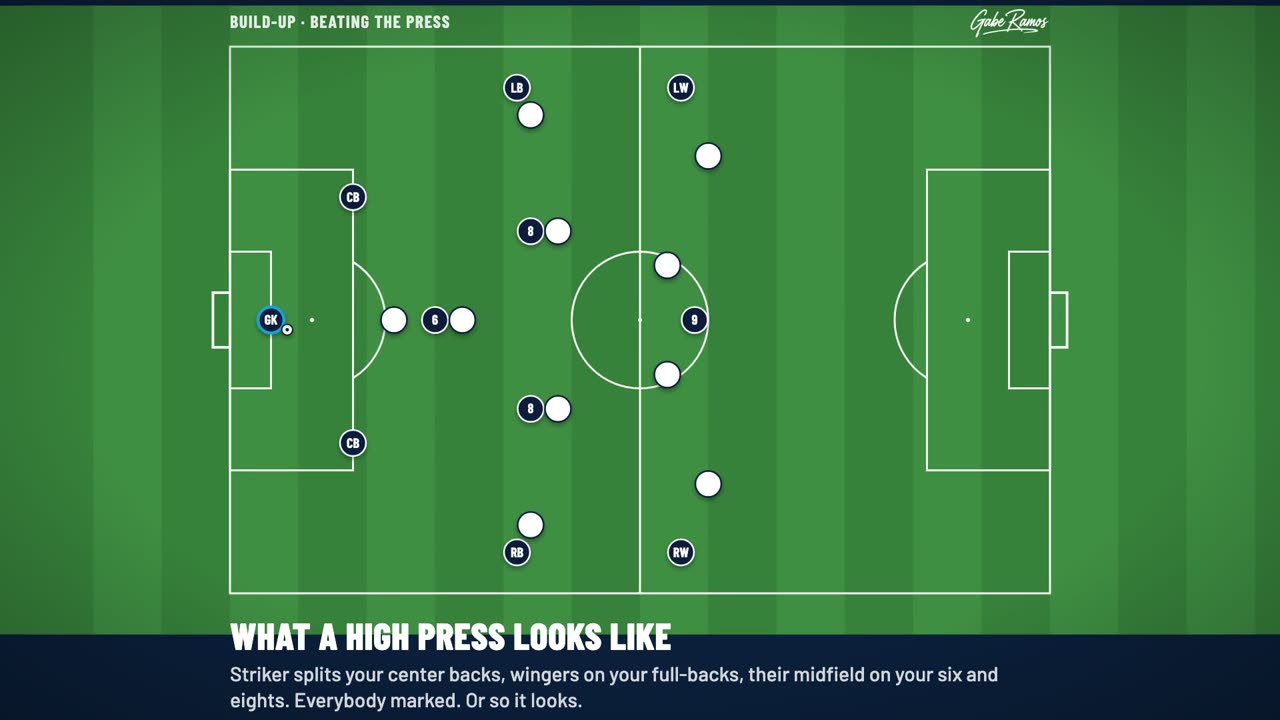
On your goal kick their striker splits your center backs. Their wingers stand on your full-backs. Their midfield takes your six and your eights. Everybody is marked. Or so it looks.
The picture is designed to make a center back feel alone, and a center back who feels alone kicks the ball away. The five rules below are all ways of showing the players that the picture is a trick: ten outfield players cannot mark eleven, and the eleventh is the one with gloves on.
Rule one: the keeper is the plus one
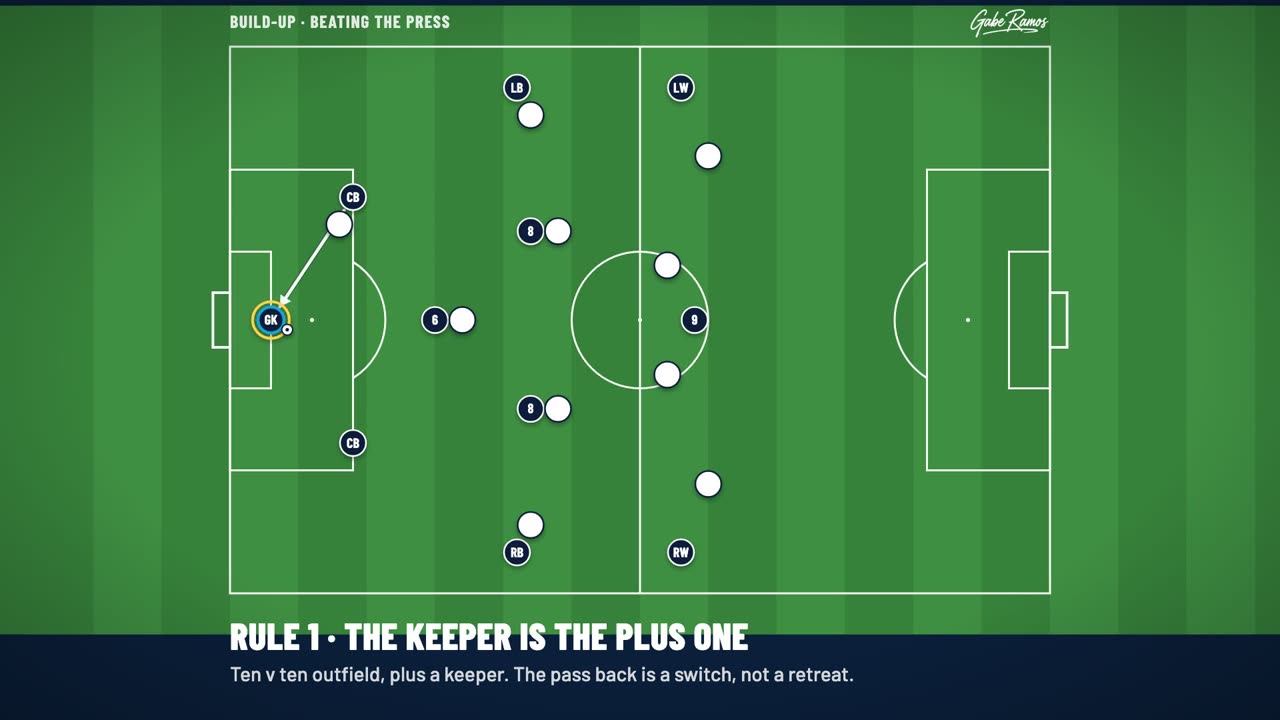
Count. They have ten outfield players. You have ten outfield players and a keeper. The keeper is the plus one. Play back to the keeper on purpose. The pass back is a switch, not a retreat. Every time they press the ball, the keeper is the free player.
Youth coaches who shout “don't pass it back” are removing the only player on the field the press cannot cover. Train the keeper to receive with an open body and play the far side, and the pass back becomes the best pass in the build.
Rule two: pull them one way, play out the other
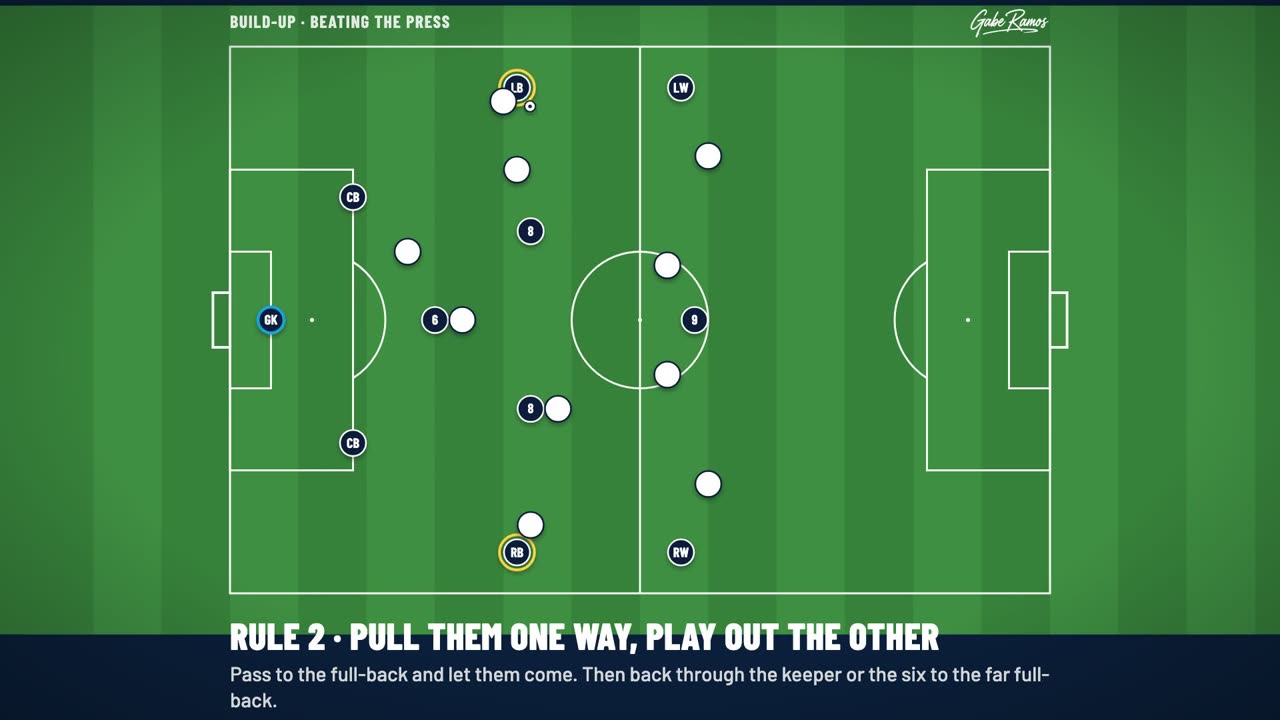
Pass to the full-back on the touchline, and let them come. Their winger jumps, their eight slides over, their striker turns. Now the ball goes back through the keeper, or through the six, and the far full-back has thirty yards of grass.
The pass to the full-back is bait. The players need to know that before they play it, so the full-back receives expecting pressure and already looking for the way back inside. Two passes later the ball is on the other side and the press is facing the wrong way.
Rule three: the third player
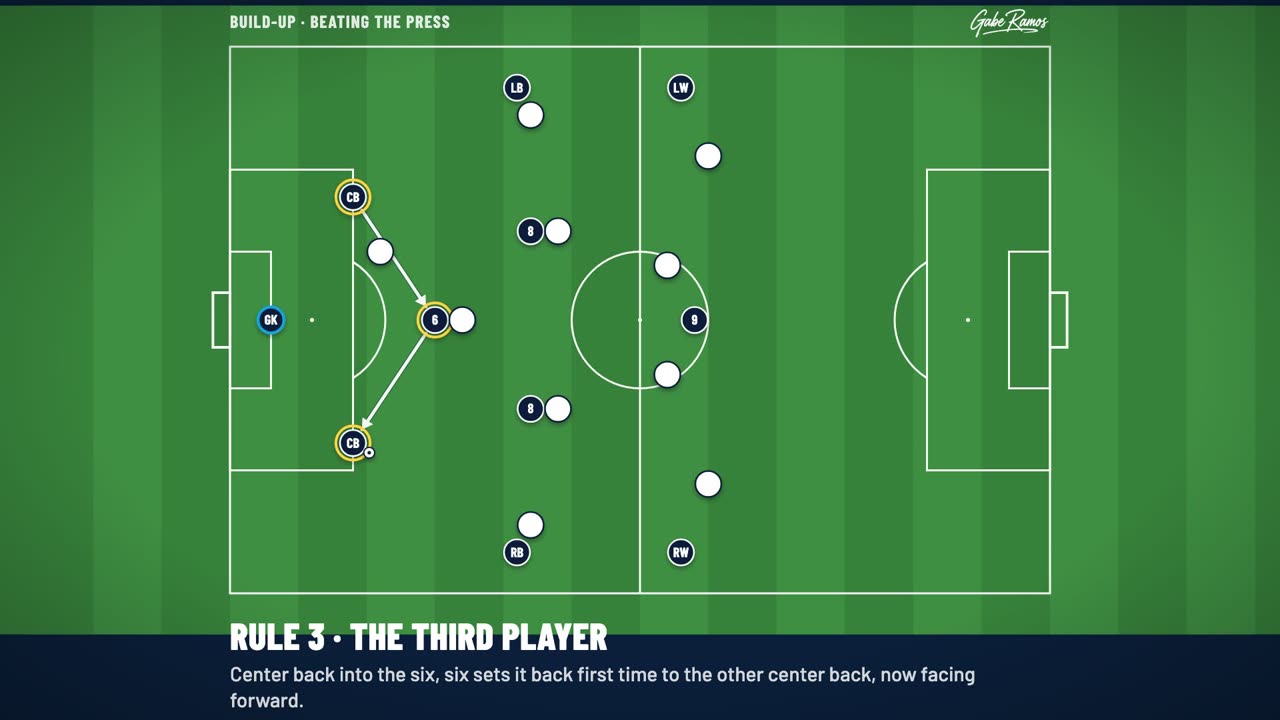
The center back plays into the six, who is marked. The six does not turn. The six sets it back, first time, to the other center back, who is now facing forward with the press behind them. Two passes to beat one presser. The third player is always the free one.
This is the pattern that turns a marked six into a weapon. The presser on the six thinks they have won, the ball bounces off the six, and the center back who receives the set is already past the first line. Up, back, through: the oldest pattern in the game and still the best.
Rule four: find who they left
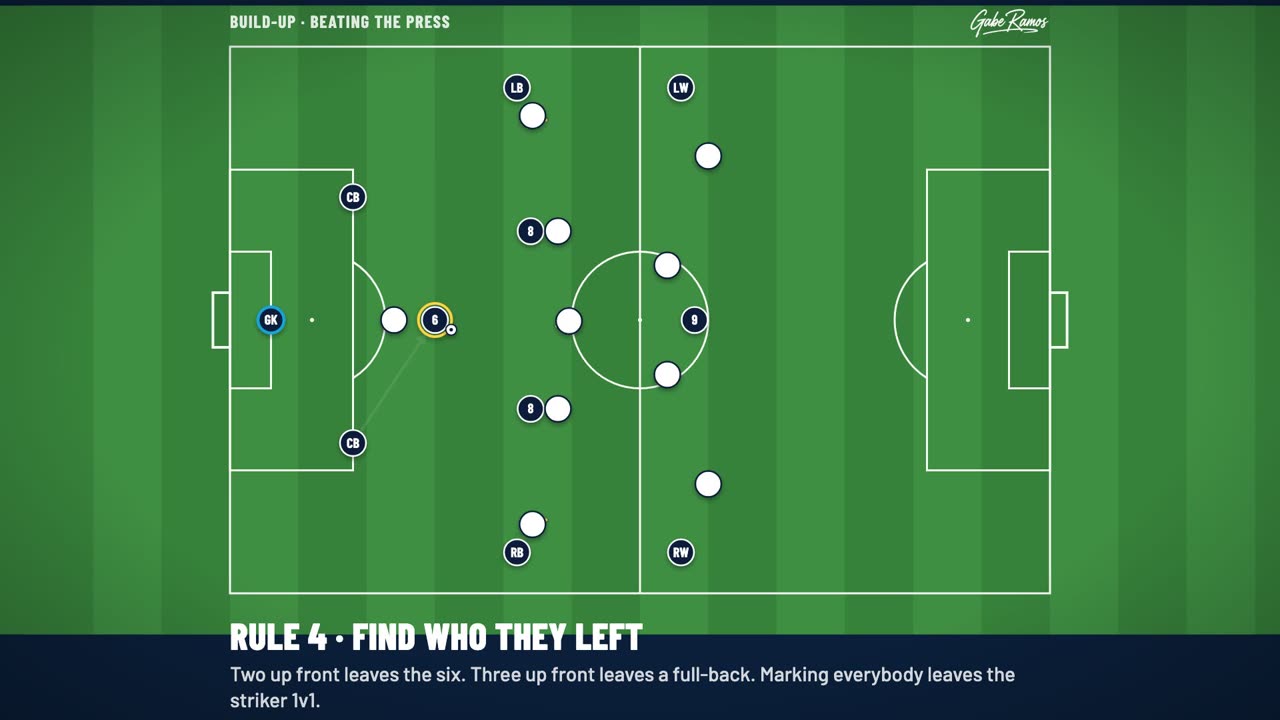
A press with two up front leaves your six free. A press with three up front leaves a full-back free. A press that marks everybody in your half leaves a striker one against one with a center back. Somebody is always free. The job is to see it before the ball arrives.
Teach the players to count the front line of the press before the goal kick is taken. Two means six. Three means full-back. Everybody means the striker. It takes a season to make it a habit and it is worth every minute.
Rule five: long on purpose
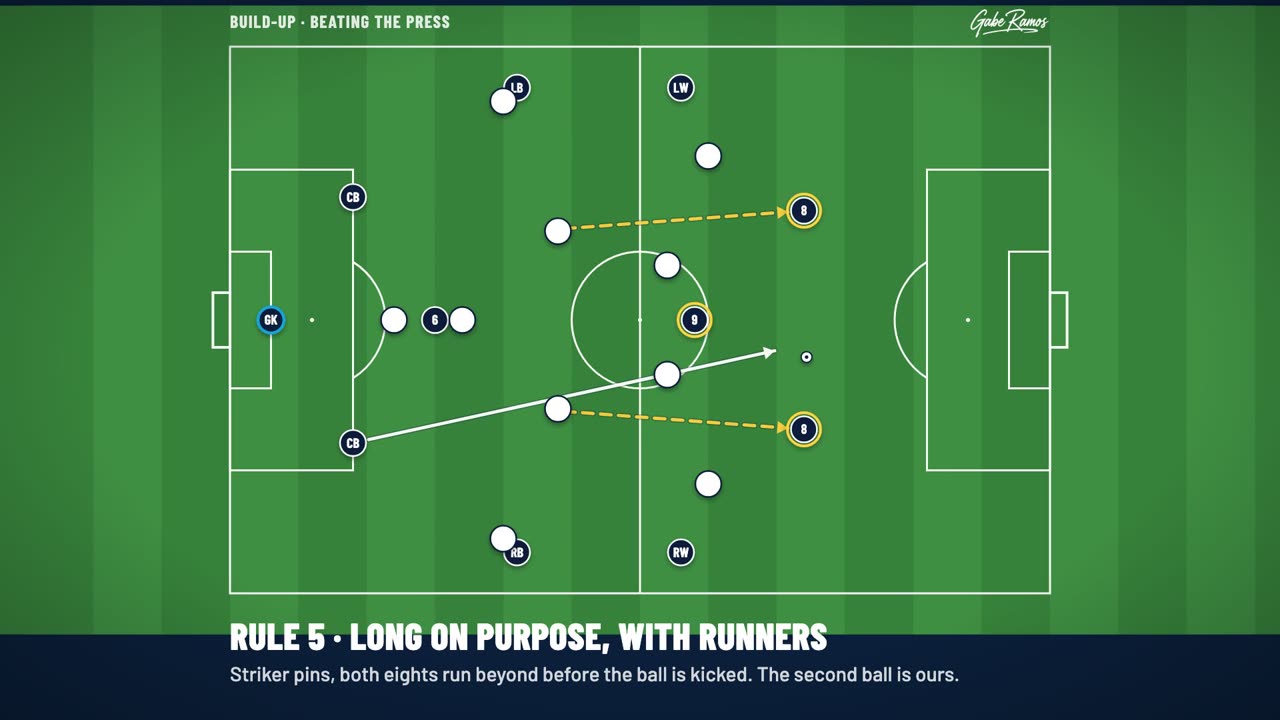
When it is a real trap, go long. On purpose, not out of fear. The striker pins the center back, both eights run beyond before the ball is kicked, and the second ball is ours because we were running before they were. A long pass with runners is a plan. A long pass without them is a clearance.
The difference between the two is timing. If the eights start their run when the ball is in the air, it is a clearance. If they start when the keeper shapes to kick, it is an attack. Coach the trigger: the keeper's run-up is the signal.
The habit that kills you
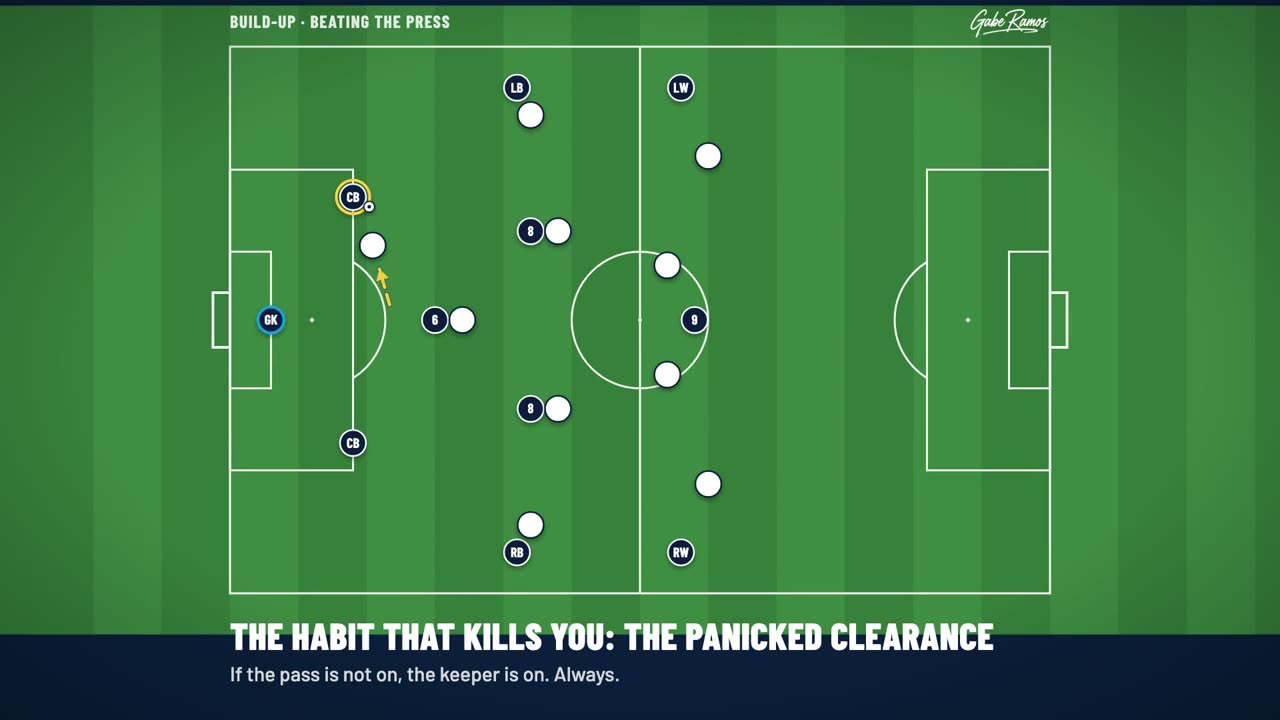
The panicked clearance. A center back gets pressed, feels the striker, and hits it into the stands. The other team gets a throw-in in your half and the press starts again. If the pass is not on, the keeper is on. Always.
A clearance under pressure feels safe to a thirteen-year-old and it is the least safe thing on the field. It hands the ball to the team that is already pressing, forty yards from your goal, with your shape still spread out for building. Replace it with the pass back and the problem solves itself.
The recap
- The keeper is the plus one.
- Pull them one way, play out the other.
- The third player is free.
- Find who they left: two up front means the six, three means a full-back.
- Go long on purpose, with runners.
- Never, ever clear it in panic.
Coach it in one session
A ninety-minute build-up session using the free activities on this site, scaled for 9v9 or 11v11. The phase of play at the end is the same one used in the 11v11 curriculum.
4v1 With a Call
RondoA 10x10, one attacker on each side, one defender in, and a helper holding up fingers. The receiver calls the number before the first touch. The look before the ball arrives is rule four in a square. Full activity page ›
Bounce or Turn
SharpenA server, a receiver and a shadow defender behind, tight or loose. The receiver looks first: tight means bounce it back and spin, loose means turn and go. This is rule three, the third player, taught one receiver at a time. Full activity page ›
Beat the First Line
SolveHalf a field. Keeper, two backs and two wide mids build against three pressers, and a striker waits in an end zone past halfway. A controlled ball into the striker is a point. Progress to six against four with a 15-second limit from the keeper's first touch. Full activity page ›
The Build-Up Game
PlayA full game where every restart is played short from the keeper and the opponents drop to halfway until the first pass is received. A goal that started with the keeper and had more than six passes counts double. Make it harder: the opponents press from the first touch, no safety. Full activity page ›
Our goal kicks
Set pieceBacks to the corners of the box, center mid shows in the middle, wide players high and wide. The keeper plays the free one. Walk it twice, then play it live against two pressers.
The 11v11 version, with the full 2-3-5 shape and the four decisions, is in the guide on playing out of the back in a 4-3-3.
Questions coaches ask
Our keeper cannot kick far. Can we still play out against a press?
A keeper who cannot kick far is exactly the keeper who should play out, because the long ball was never an option. Rules one to four need a keeper who can pass fifteen yards along the ground and receive with an open body. Train that, and the press is beatable without a single long kick.
What if the other team presses with everybody, man for man?
Then somebody is one against one somewhere, usually your striker against a center back, and the long ball with runners is on. Rule five exists for exactly this press. Pin, run beyond before the kick, and the second ball is yours.
How do we practice this without conceding goals in training?
You do not. The phase of play lets the pressers score in a real goal, because the risk is what makes the decisions real. Count build-ups completed, not goals conceded, and tell the players that number is the score.
Is it ever right to just kick it long every time?
If you are winning 1-0 with two minutes left, yes. The rest of the time it teaches your players nothing and gives the ball back forty yards from your goal. Playing out loses you a game or two in September and wins you the season.
Keep reading
 Tactics guidePlaying out of the back in a 4-3-3
The 2-3-5 build shape, the first triangle and the four decisions a center back makes.
Read the guide › Tactics guideHow to press in a 4-3-3
Three moments, four triggers, the touchline trap and the six who never joins.
Read the guide › Tactics guideHow to beat a low block
Width and patience, move the block then switch, the wide two v one, the cutback.
Read the guide ›Ten build-up activities, each with a video
100 Possession Activities has a full theme on playing out from the back, from a keeper and two backs against one presser to a 9v9 where every goal kick is short, plus nine more themes: rondos, through the lines, switching, overloads, movement, timing, counter-pressing and counter-attacks.