Coaching tools › Guides › Playing out in a 4-2-3-1
Tactics guide · 4-2-3-1 · in possessionHow to play out of the back
in a 4-2-3-1
In a 4-3-3 the six plays alone. In a 4-2-3-1 the six has a partner, and that changes the first pass, the switch, and where your free player lives. This guide covers the build shape with a staggered double pivot, the four decisions the center back makes, the job of the ten, the failure you will see every weekend, and the 3-4-3 the shape turns into when the ball is secure.
 How to Play Out of the Back in a 4-2-3-1
The build shape: staggered pivots
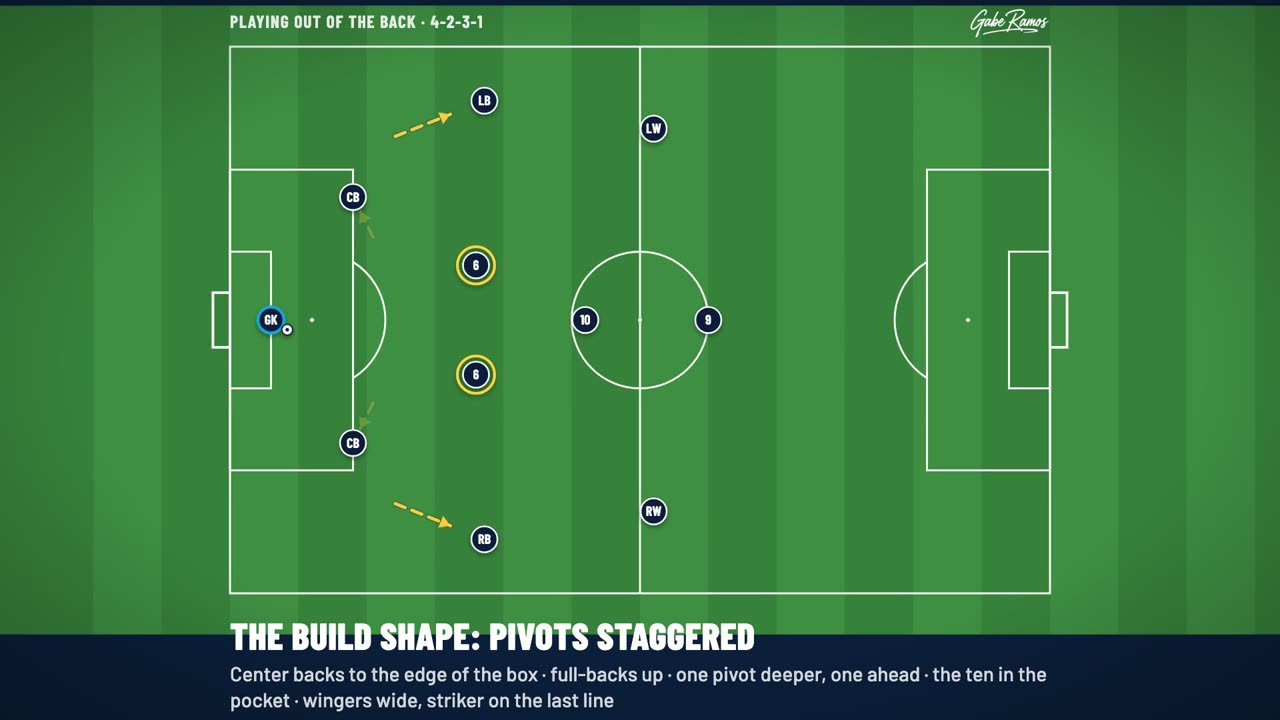
On a goal kick the center backs split to the corners of the box and the full-backs push up, exactly as they do in a 4-3-3. The difference is in the middle. The two pivots sit either side of the center circle, and the key is that they are staggered: one sits deeper, one slightly ahead. The ten lives in the pocket behind the opposition midfield. Wingers wide and high, striker on the last line.
The stagger is what makes the shape work. Two pivots on the same line can be covered by one presser and split by one pass. Two pivots on different lines cover two zones, and the ball always has a forward option and a safety option at the same time. If you take one thing from this guide, take the stagger.
The first triangle: center back, deeper pivot, keeper
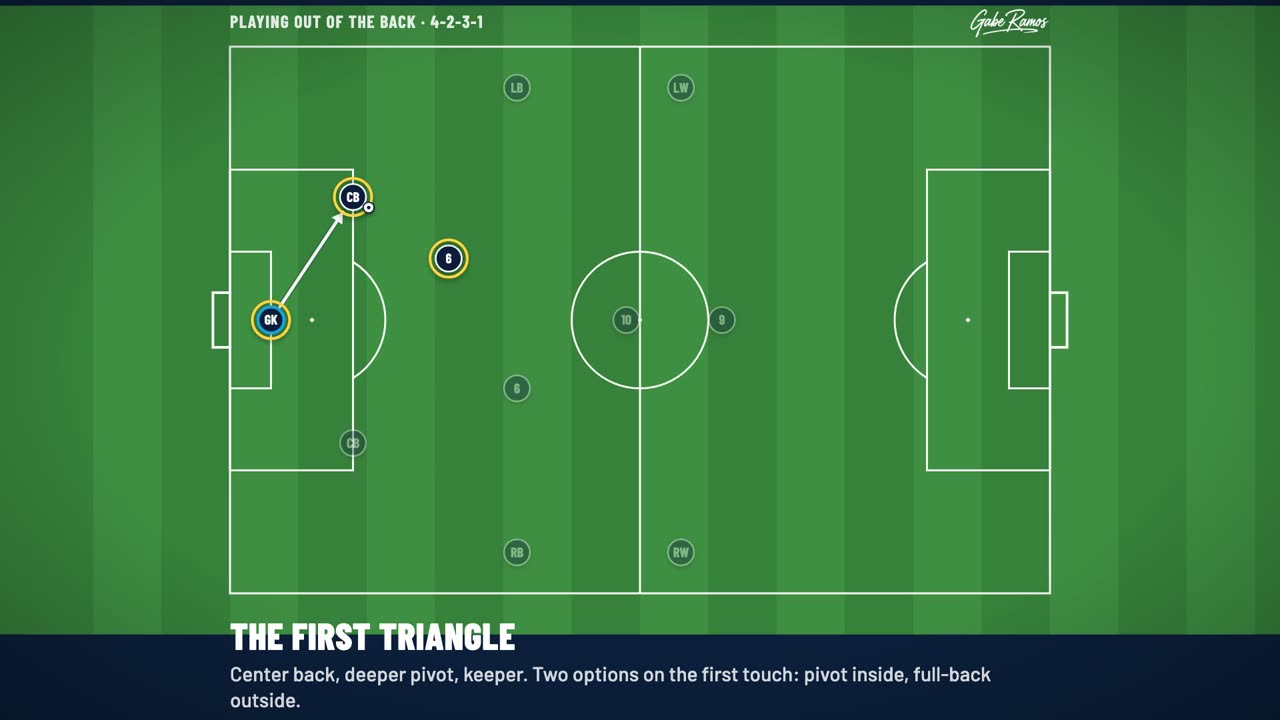
The keeper is the first attacker. Split the center backs with the first pass, and the center back receives facing the field with two options already there: the deeper pivot inside, or the full-back outside. Never a panicked clearance.
The deeper pivot is the six of this shape and the first triangle belongs to them. They sit close enough to the center back to be a one-touch option, and on an angle so that the pass into them is never straight through the striker.
- Center backs at the corners of the box, not inside it.
- The deeper pivot eight to ten yards off the center back, on an angle.
- The higher pivot ten yards further on, never level with the deeper one.
Decision one: carry
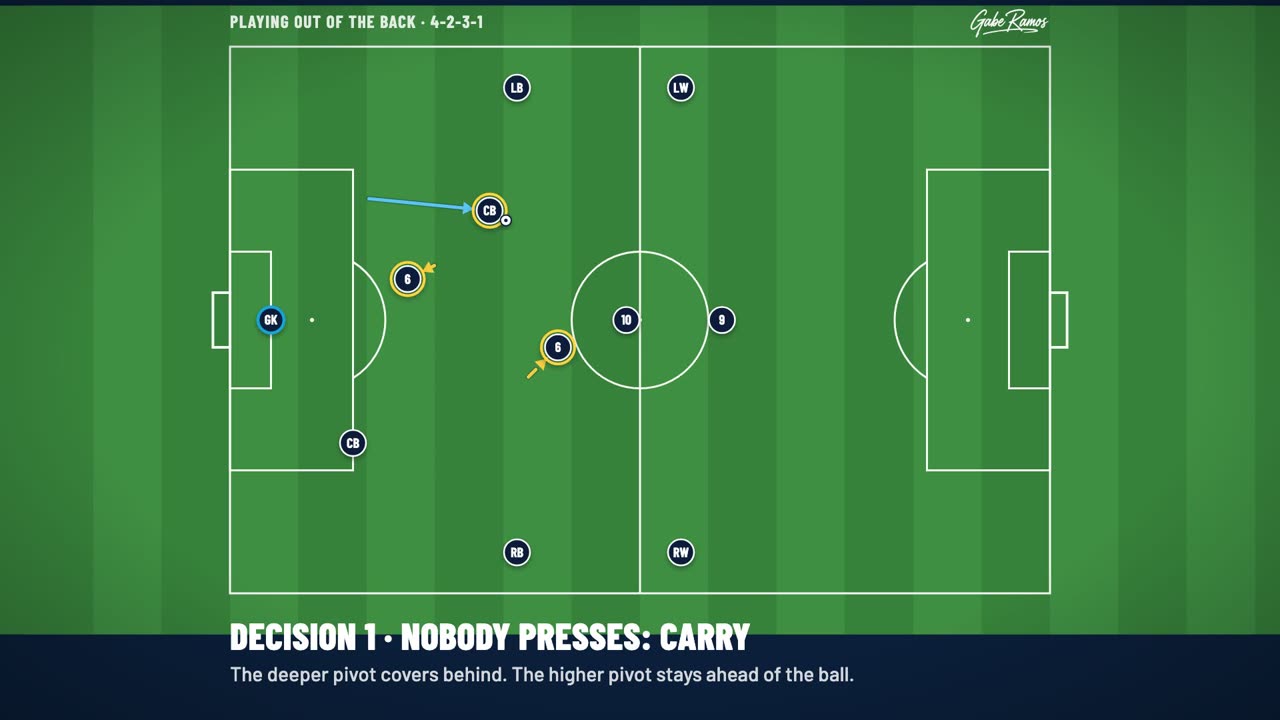
Nobody presses you? Carry. Drive into midfield. The deeper pivot slides across to cover behind you, and the higher pivot stays ahead of the ball so you still have a forward pass when the defender finally steps.
The extra pivot makes the carry safer than it is in a 4-3-3, because there is always a player covering the space the center back left. Center backs who will not carry in a 4-2-3-1 are wasting the safest carry in the game.
Decision two: one presser, find the ten
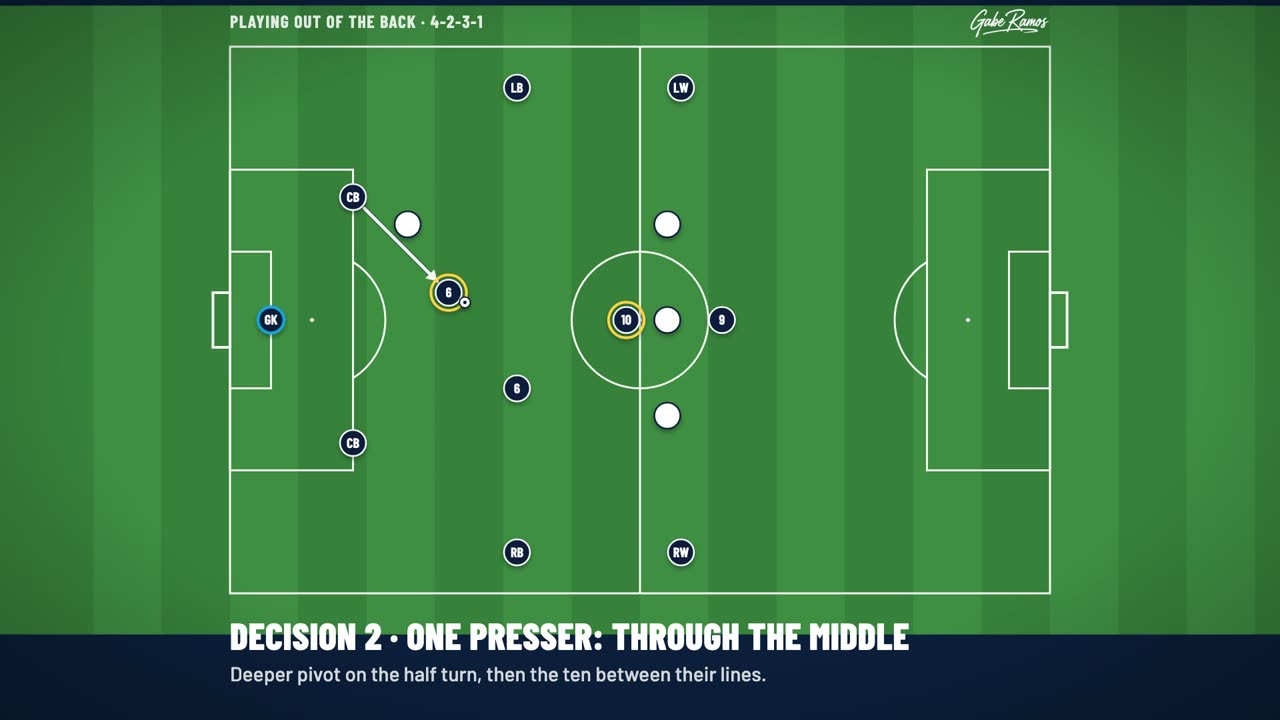
One striker steps to press. The deeper pivot shows on the half-turn, the center back plays into them, and now the ball goes through the middle. Out of the back in this shape means through the middle: find the ten on the half-turn, between their lines, where a 4-2-3-1 has nobody to mark them.
The pass sequence is center back, deeper pivot, ten. Three players, two passes, and the ball is behind their midfield before they have turned around. Coach the deeper pivot to receive on the half-turn so that the pass to the ten is first time.
Decision three: two pressers, the deeper pivot drops
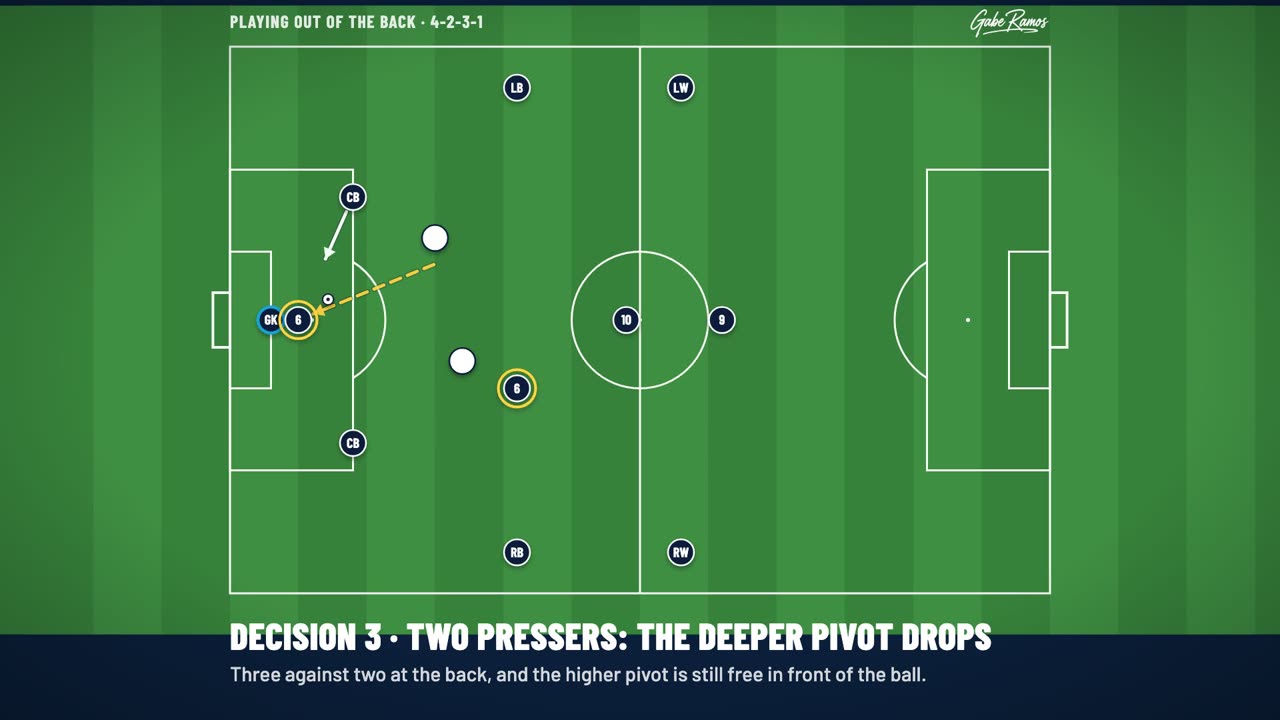
They press with two. The deeper pivot drops between the center backs. Now it is three against two at the back, and because there are two pivots, the higher one is still in front of the ball as a free player. Play the free player. If it is the keeper, use the keeper.
This is the advantage the double pivot buys you. In a 4-3-3, dropping the six empties the middle. In a 4-2-3-1, dropping the deeper pivot leaves the higher pivot exactly where the free player needs to be.
Decision four: one side crowded, switch through the pivot
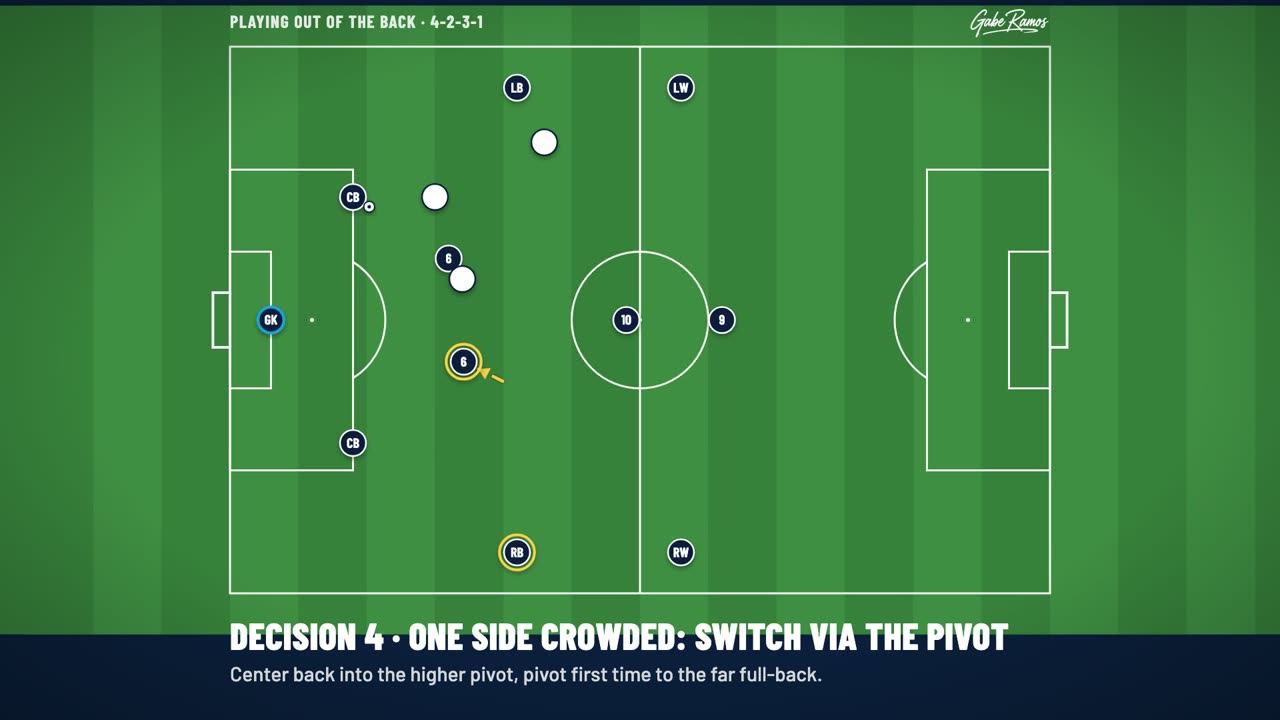
One side is crowded. In a 4-3-3 the switch went through the keeper. Here you have a second route: the higher pivot. Center back into the pivot, pivot first time to the far full-back. Two passes, and the ball is on the other side with space in front of it.
The far pivot and the far full-back are a partnership. Coach them to look for each other every time the ball goes to one side, so that the switch is already on when the near side closes.
The ten: pockets first, runs beyond second
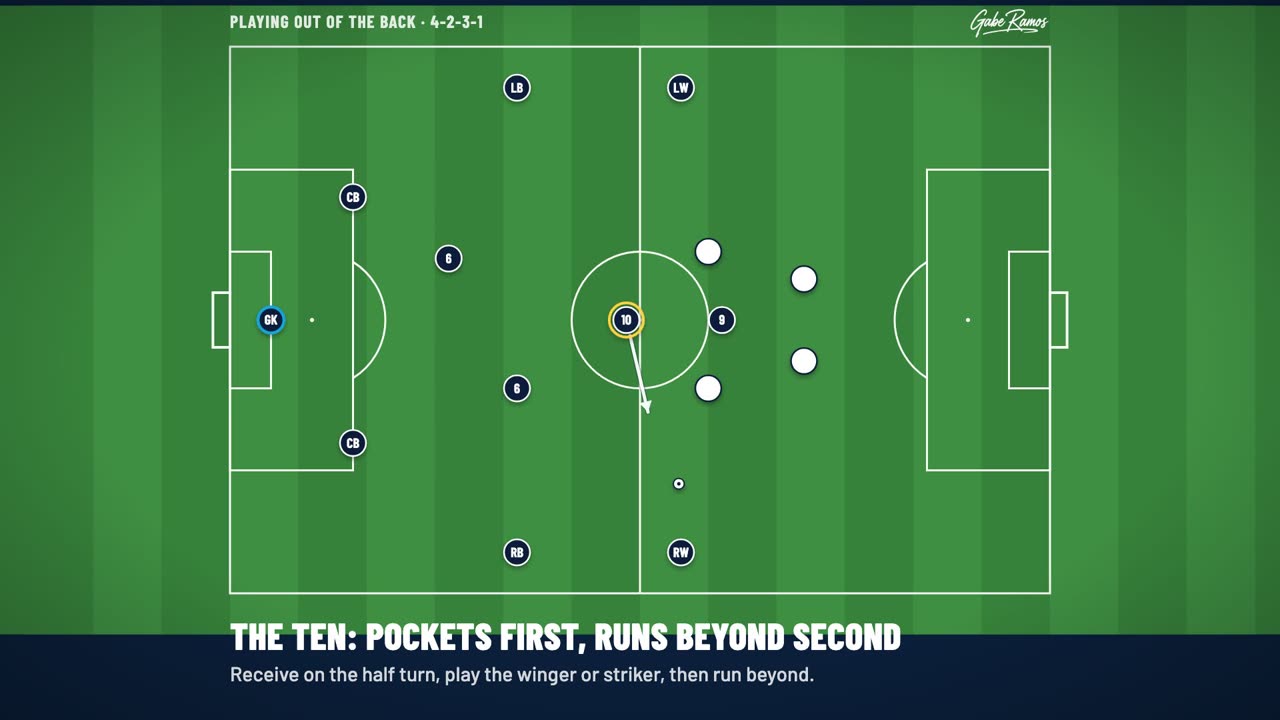
Now the free player. The ten finds the pocket, receives on the half-turn, and plays the winger or the striker. Then the ten runs beyond. Pockets first, runs beyond second. If the ten only receives and never runs, the striker is alone on the last line and the shape becomes a 4-2-4 with nobody in the box.
The ten is a position only some teams have the player for, which is why the guide on choosing between the two shapes starts with that question.
The failure you will see every weekend
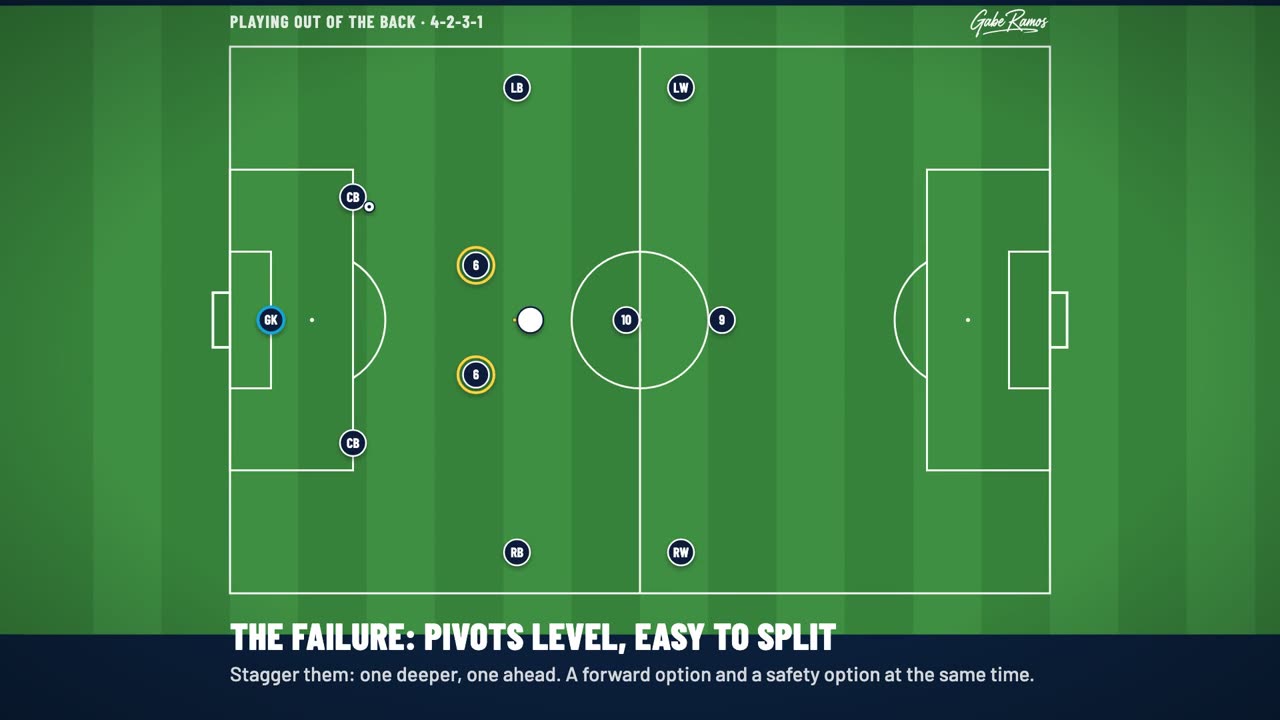
The two pivots stand level, side by side. One pass takes them both out, and one presser can split them. Stagger them. One deeper, one ahead. Now they cover two zones, and the ball always has a forward option and a safety option at the same time.
Watch for it on goal kicks especially, because that is where young pivots drift toward each other for company. The fix is a cone on the training field: the deeper pivot on the edge of the D, the higher pivot ten yards further on.
Rest defense and the 3-4-3
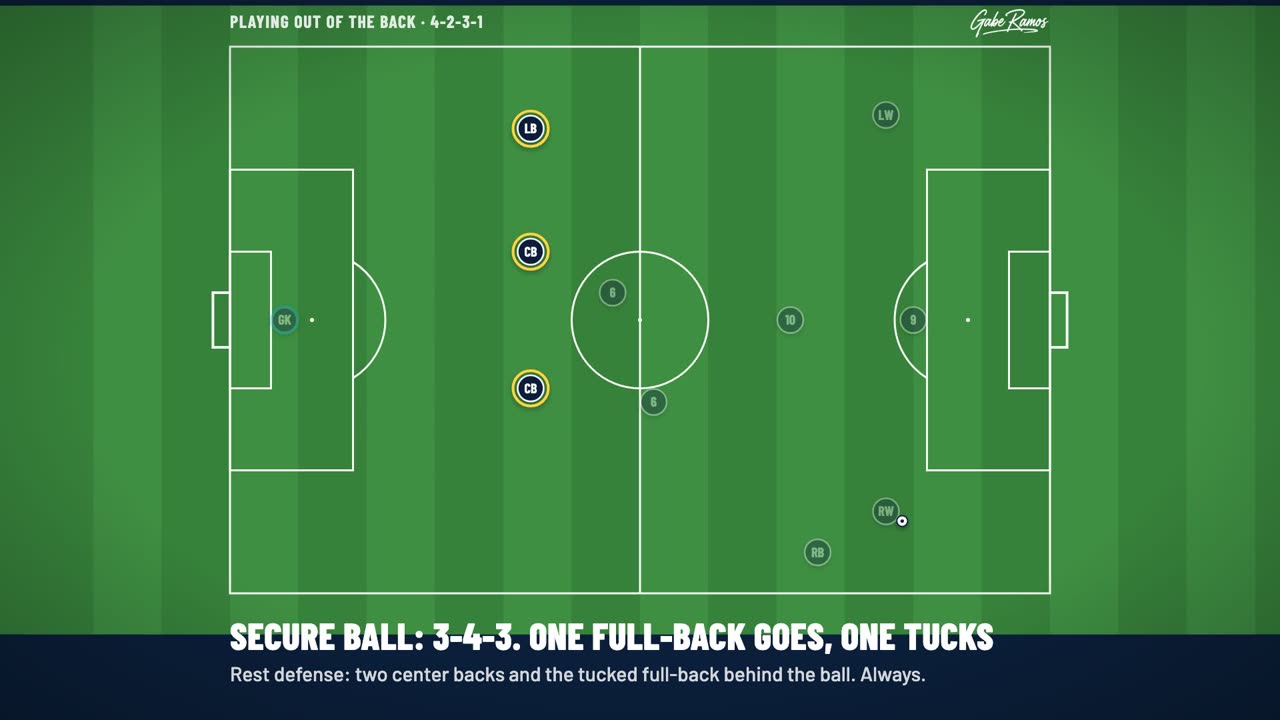
When the ball is secure, the shape changes. One full-back goes, one full-back tucks in beside the center backs, and you are a 3-4-3. Call it early and loud: who goes, who tucks. Rest defense is the two center backs and the tucked full-back behind the ball. Always.
The rule is one goes, one tucks, decided by where the ball is: the full-back on the ball side pushes on, the far one slides in. The full guide on rest defense covers the five-second fight when the ball is lost.
The recap
- Center backs split, pivots staggered, ten in the pocket.
- First triangle: center back, deeper pivot, keeper.
- Nobody presses: carry.
- One presser: through the middle to the ten.
- Two pressers: the deeper pivot drops, the higher pivot is free.
- One side crowded: switch through the pivot.
- The tucked full-back stays home with the center backs.
Coach it in one session
The build-up session from the 4-2-3-1 edition of the 11v11 curriculum, week 3, MD-3. Ninety minutes, sixteen to twenty players.
5v2 With a Link
RondoFour attackers on the sides of a 12x12, one inside as the link, two defenders. A pass into the link and out to a different side is worth two. The link is the pivot in miniature: receive with a defender on your shoulder, play out to a side you were not facing. Full activity page ›
Switch Through the Middle
SharpenTwo attackers on each side line of a 20x14, two in the middle, three defenders. Score by moving the ball from one side to the other through a middle player; direct side-to-side passes do not count. The middle players are your pivots, receiving on the half-turn already facing the far side. Full activity page ›
Build against the press, phase of play
SolveA 70x60. Keeper, back four, two pivots, the ten and the striker build from a goal kick against a full 4-2-3-1 press of ten. Score by getting the ball to either winger in a wide end zone past halfway, under control. Pressers score in the goal. Ten goal kicks each side. Up a level: the nine is marked, and the wingers must be found inside twelve seconds.
11v11, build as a 3-4-3
PlayThree eight-minute periods. Every goal kick short. When the ball is secure one full-back goes and one tucks; the coach freezes play to check. A goal from a build with a switch through a pivot counts double.
Our goal kicks
Set pieceCenter backs to the corners, full-backs to halfway, deeper pivot on the edge of the D, higher pivot ten yards on, ten in the pocket. The keeper picks the free one.
The 4-3-3 version of this session, with one six instead of two pivots, is in the 4-3-3 guide.
Questions coaches ask
Which pivot drops when they press with two: the deeper one or the nearer one?
The deeper one, always. The deeper pivot is already closer to the center backs and already facing the right way, and dropping them keeps the higher pivot in the forward zone where the free player lives. If the nearer one drops instead, you often end up with both pivots behind the ball and nobody ahead of it.
Can the ten drop into the pivot line to help?
Occasionally, when both pivots are marked and the ten is the only free player. But if it happens every time, you have a 4-3-3 with the wrong labels and no one between the lines. Coach the ten to stay in the pocket and trust the switch through the keeper or the pivot.
What if we only have one good pivot?
Then play the 4-3-3 and give that player the six role alone. The 4-2-3-1 asks for two players who can receive under pressure and screen without the ball; one strong pivot and one weak one is worse than one six with two eights ahead. The formation guide walks through the choice.
Which full-back goes and which tucks?
The one on the ball side goes. The far full-back slides in beside the center backs and the near center back steps up so the three are level. Decide it by where the ball is, not by which full-back is the better athlete, or the players will never learn the rule.
Keep reading
 Tactics guidePlaying out of the back in a 4-3-3
The 2-3-5 build shape, the first triangle and the four decisions a center back makes.
Read the guide › Tactics guide4-3-3 or 4-2-3-1: which fits your team?
Four questions about your six, your ten, your full-backs and how you defend.
Read the guide › Tactics guideRest defense: attack without getting countered
Three stay behind the ball, the nearest three press for five seconds, and the bench calls every turnover.
Read the guide ›The whole 11v11 game model, twelve weeks of sessions
The Full Season Travel Curriculum for ages 13 to 18 comes as two editions, one for the 4-3-3 and one for the 4-2-3-1: the game model in six pages, 36 sessions built around a match week (MD-4, MD-3, MD-2), twelve match-day pages, set pieces and the 35-minute warm-up. Every phase of play in these guides is in it.