Coaching tools › Activities › Possession and passing
Free activity · 100 Possession ActivitiesPocket Rondo
Three lines of cones split a 15x12 into thirds. Four attackers on the ends, one in the middle third with three defenders. Score by passing from one end to the other through the middle, where the pocket player receives side-on between two defenders.
Setup
A 15x12. Three lines of cones split the area into thirds. Four attackers on the ends, one in the middle third, three defenders in the middle third.
How it works
- Score by passing from one end player to the other through the middle third.
- The pocket player may receive and lay off, or let it run.
- Defenders win: everyone changes.
Scoring
Ten points, then rotate the pocket player.
- Pocket: receive side-on between two defenders.
- End players: pass through the pocket with pace.
- Play it when the defender's back is turned.
Make it easier or harder
- Progression 1: The pocket player must touch the ball in every scoring move.
- Progression 2: Two pocket players, four defenders.
Coach’s notes
- If It Stalls: Pocket never open? Make the middle third two yards wider.
Why it works
The pocket is where your ten lives. This rondo teaches the player in it to receive side-on between two defenders, lay it off or let it run, and show again, with three defenders making the space close as fast as it opens.
If the pocket is never open, the area is too tight for your group. Widen the middle third by two yards before changing anything else.
Where it sits
This is activity 22 of 100 in 100 Possession Activities (Theme 3 · Through the Lines). The book is ten themes of ten rungs each, from a 3v1 square to a full 9v9 transition game, and every activity has its setup, rules, scoring, two progressions, three coaching points and an animated video like the one above.
All playing through the lines drills ›
More like this
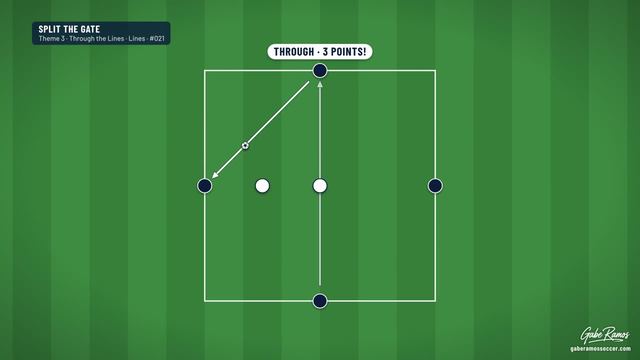 Ages 11+ · Possession and passingSplit the Gate
Four attackers around a 12x12 with two defenders standing as a gate in the middle, three yards apart.
Open the activity ›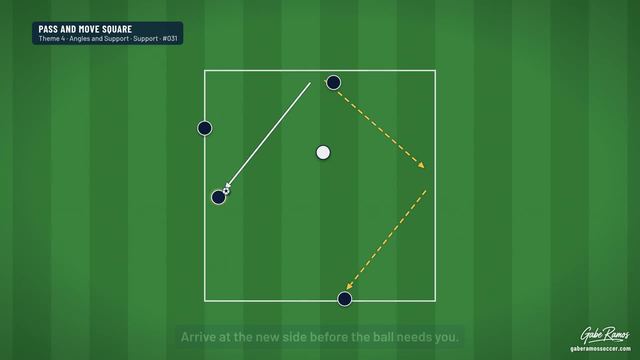 Ages 11+ · Possession and passingPass and Move Square
A 4v1 rondo with one rule that changes everything: after you pass, you must move to a different side of the square before you can receive again.
Open the activity ›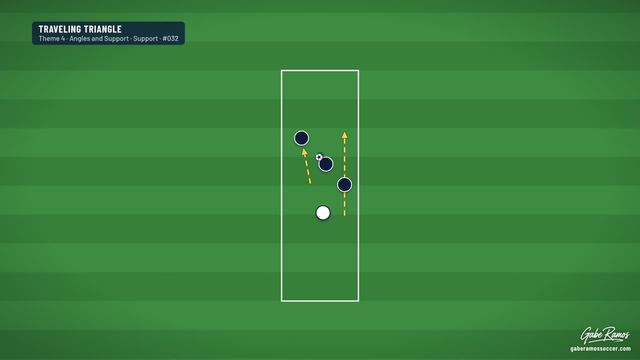 Ages 11+ · Possession and passingTraveling Triangle
Three attackers with one ball travel down a 10x30 channel against a defender who may only walk, keeping a triangle around the defender the whole way.
Open the activity ›All ten rungs of this theme, and nine more themes
100 Possession Activities is a 115-page PDF with 100 animated MP4 videos: rondos, playing out from the back, through the lines, support, switching, overloads, movement, timing, counter-pressing and counter-attacks. Print the page, watch the clip, run the session.